Module 1 Introduction
Preschoolers spend a great deal of time running, climbing, jumping, and chasing each other. They scribble, paint, build, pour, cut with scissors, put puzzles together, and string beads. Therefore, a child’s physical skills are an important part of their development and affect all areas of their growth and learning. Children need to develop physically during their early childhood years to do everyday tasks. Developing these physical skills is necessary for them to become fully independent.
Physical skills can be categorized into two main groups: gross motor and fine motor. Both work together to help you perform basic everyday functions that we sometimes take for granted.
Learning Outcomes for Gross and Fine Motor Skills
By the end of this module, participants will be able to:
- Identify three activities they can do with their child that will improve gross and fine motor skills.
- Differentiate between fine motor skills and gross motor skills.
- Understand the importance of practice and repetition in improving gross and fine motor skills.
Gross Motor Skills
When we say gross motor skills, we are talking about skills that involve big movements and coordination of the arms, legs, and other large body parts.
Children develop gross motor skills at different rates. Running, jumping, and throwing can be difficult if a child has not fully developed these skills. You want your child to be able to control big muscle movements so they will be able to run, skip, hop, trot, balance, and coordinate movement so they can start, stop, turn, and go while running and not fall.
We want them to throw, catch and bounce a ball, jump over objects, swing and climb on playground equipment, and pedal and steer a tricycle or bike.
If you want to give your child’s gross motor skills a little extra boost, we have some fun activities you can do at home to support this development.
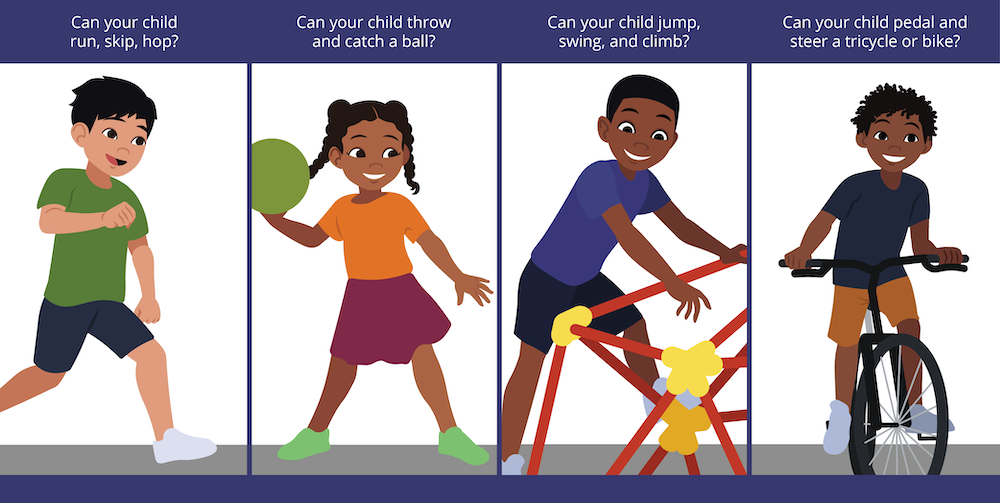

- Can your child run, skip, hop?
- Can your child throw and catch a ball?
- Can your child jump, swing and climb?
- Can your child pedal and steer a tricycle or bike?
Activities for Gross Motor Skills
Below are fun, easy activities that you can do with your child to help strengthen their gross motor skills. Click on each title to reveal the full activity.
Kids love bubbles! This simple activity is a great way to help your child build balance, coordination and strength while having fun. We call it Bubble Smash! What you’ll need:
- A container of bubbles (you can find them at most dollar stores or in Walmart)
What to Do:
- Blow bubbles for your child to chase.
- Encourage them to run, jump, and stretch to pop as many bubbles as they can!
- Let the bubbles drift high and low to get your child moving in different directions—reaching up, bending down, and changing speed and balance.
As your child chases and smashes bubbles, they’re practicing important gross motor skills, running, jumping, zigzagging, balancing, and coordinating their movements, all while having fun.

- Container of bubble soap
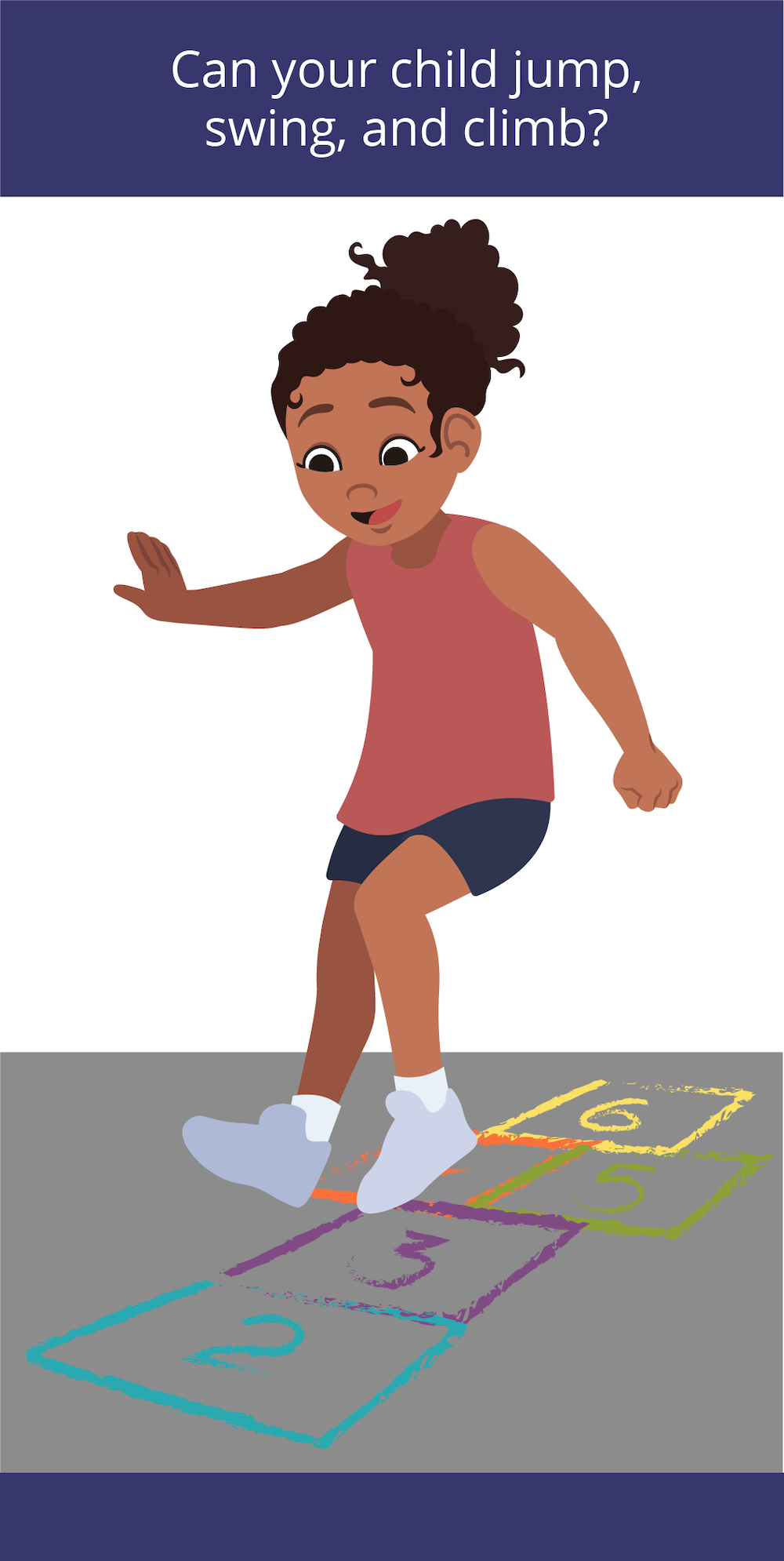
Another classic way to develop gross motor skills is hopscotch. Who remembers playing hopscotch as a child? It is simple, active and full of learning opportunities.
Think about the muscle movements required in a typical game of Hopscotch! Players throw a marker … stand… hop… stop… bend… pick up… straighten up… leap… jump… hop… hop…land… turn… and repeat. Most of these movements happen on one foot, which is one of the most complex movements a body can do!
Hopping and jumping require strong gross motor skills, balance, and coordination. Hopscotch is a simple way to practice those skills. Plus, hopscotch naturally reinforces number recognition and counting skills.
All you need is some chalk and a sidewalk. If you don’t have a sidewalk to draw on or a playground nearby, but you have a hallway or any floor, you can set up hopscotch indoors using painter’s tape.
To play, start by drawing or taping a hopscotch grid with numbers 1–10. Give your child a small object, such as a beanbag, coin, or stone, to use as the marker. Take turns tossing the marker onto one of the numbered squares, then hop through the pattern, skipping the square with the marker. On the way back, stop and bend to pick up the marker before finishing the course. Then, it’s the next player’s turn to toss and hop again!
- Chalk or
- Painters tape (if inside)
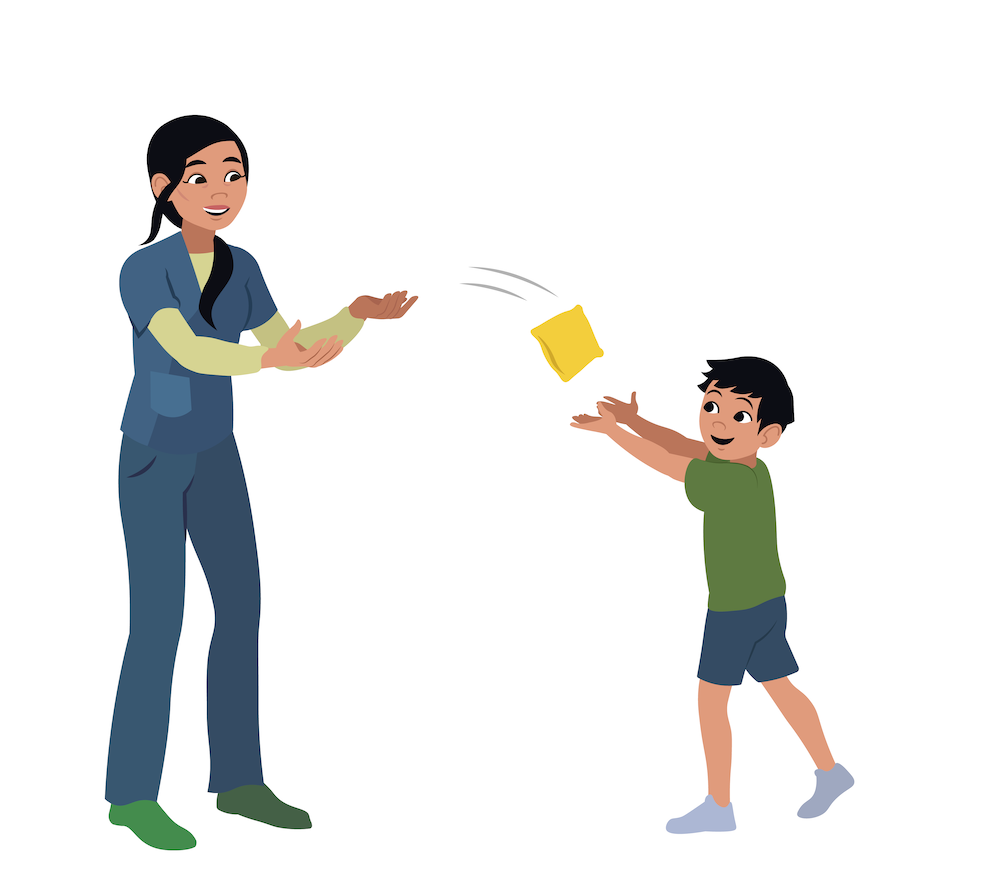
Gross motor skills are those skills that require whole-body movement and involve the large muscles of the body. It also includes hand-eye coordination. An activity to assist in developing these skills is Throw and Catch. While throwing and catching, a child uses those large arm muscles. To be able to throw the ball to someone or catch a ball coming toward them from someone, a child’s hand-eye coordination must be good.
When throwing indoors, soft, spongy balls or beanbags are recommended. Start with larger balls and gradually move to smaller ones as your child’s skill level increases. Use balloons, deflated beach balls, or soft, spongy balls for children still mastering catching. These items move slower and are more forgiving if a catch is missed.
Remember, children develop at different rates. So, if your child struggles with throw and catch, you can start by rolling a ball back-and-forth on the floor. Rolling back and forth reinforces the same motion they will need to play catch.
- Beanbag or soft object to throw
Animal Walk is another activity to help children develop gross motor skills. Physical and occupational therapists often recommend this activity because it strengthens the body and hands, improves coordination, supports both fine and gross motor skills and builds spational awareness. . We have included a chart to help you with this activity. Choose one animal from the chart and spend a few minutes a day having your child “walk” like that animal.
You can ask them to do something like, “Hop like a grasshopper and put this paper in the trash can” or “Crab walk to the bathtub.”
Each of these “walks” uses different muscles, builds coordination, and helps develop gross motor skills.
Fine Motor Skills
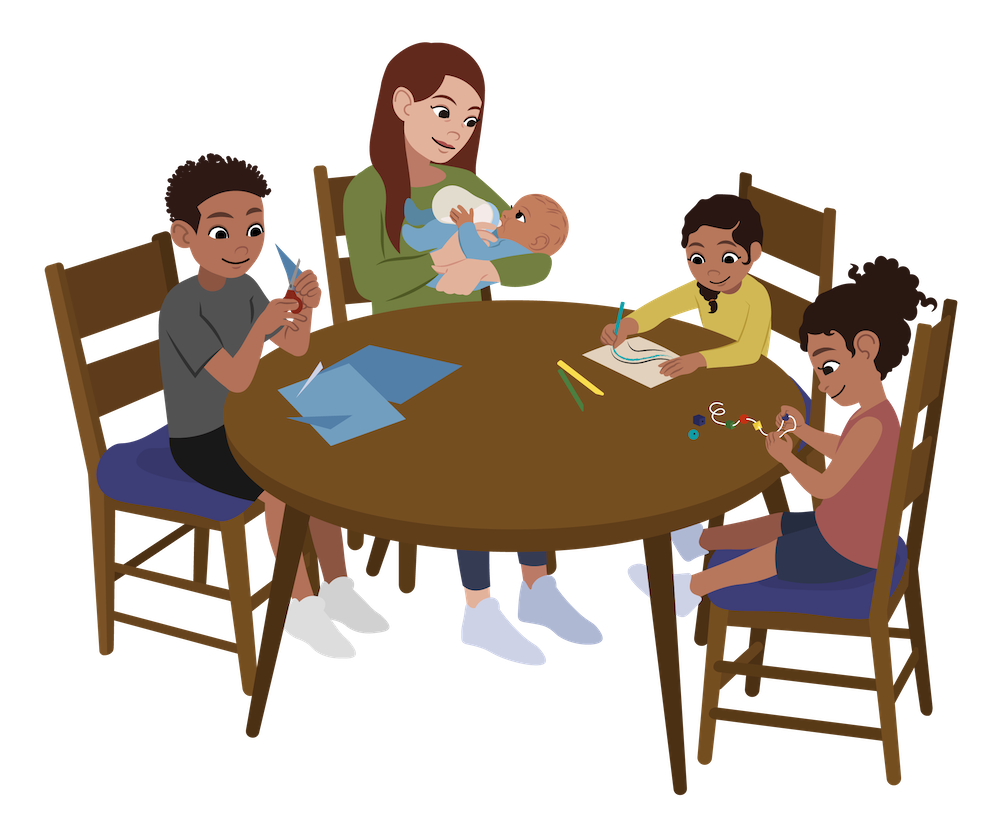
Fine motor skills generally refer to your child’s ability to control the small movements of the hands and fingers, as well as the small muscles of the face and mouth (like the tongue). These skills are essential for everyday tasks such as speaking, eating, and anything that involves precise hand movements.
Activities like holding a pencil, crayon, or paintbrush, manipulating small toy pieces or blocks, using utensils while eating, and cutting with scissors all rely on fine motor skills.
It’s important to remember that most preschool aged children will not have fully developed fine motor skills yet. This is totally normal. The good news is that you can help practice and strengthen these skills in fun and simple ways that only takes a few minutes a day!
- Can your child manipulate small pieces of toys – blocks, doll pieces, etc.?
- Can your child hold and use a pencil, crayon, paintbrush?
- Can your child use a fork and spoon to eat?
- Can your child use scissors?
Activities for Fine Motor Skills
Below are the activities you can do with your child to support their fine motor skills. Click on the title to reveal the activity content.
Tracing lines is a great way for preschool children to develop fine motor skills and practice the movements they’ll need for writing. We have provided sheets for you with dotted lines as a helpful tool, but you can also create your own by drawing dotted lines on a piece of paper.
Begin with tracing short straight lines and then progress to the more challenging lines with curvy lines and loops. Remind your child to hold the pencil firmly in their dominant hand using the correct pencil grip and use their non-dominant hand to hold the paper steady.
Note: Pay attention to your child’s hand preference. Children usually start to prefer using one hand over the other around the ages of 2 to 4, but it is common for them to change from time to time. Around ages 4 to 6, clear preference will be established. Children who do not show a preference and switch hands may struggle a little with fine motor tasks like cutting neatly with scissors or writing with a pencil.
- Pencil or crayon
- Printed tracing handout below, or parent-created handout
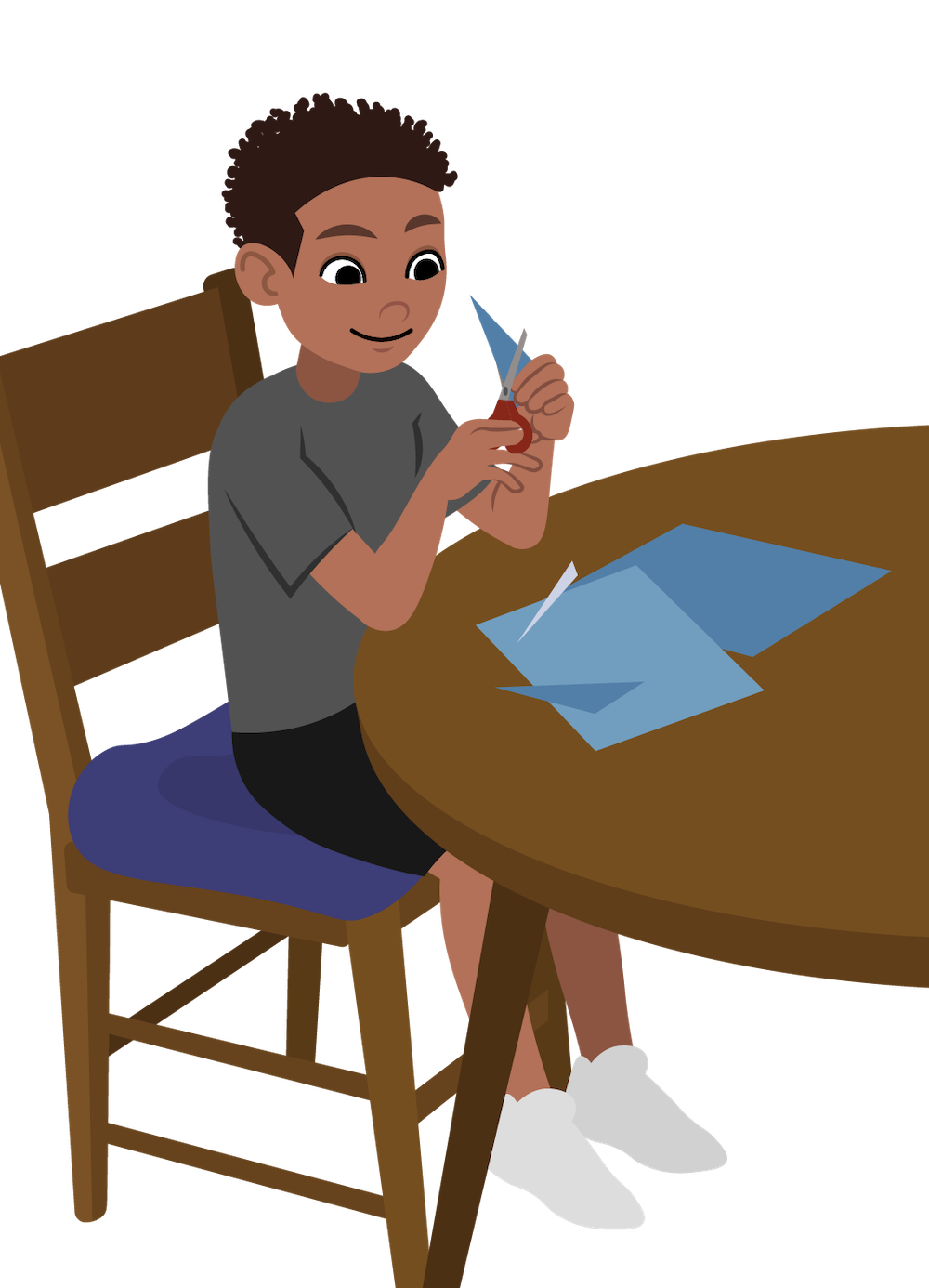
Another way to develop fine motor skills is practicing cutting. Using scissors is an acquired but necessary skill. Children need to know how to hold scissors and the proper rules for handling scissors safely. They need to learn what they can and cannot cut and how to use scissors effectively without frustration. This only comes with modeling and practice.
This may not be an easy task for children. When children are first given scissors, some will grab the handle, put the fingers in any hole, and try cutting, especially if children have watched people cut things. Others will grab the handle and try to use two hands to cut. Remember to be patient.
A good way to approach this is to teach and demonstrate the correct way to use scissors. Then have them practice putting their fingers in the correct holes. Then move on to having your child practice opening and closing the scissors. When they are comfortable with these two tasks, move on to cutting pieces of paper with no lines and then move to cutting along dotted lines when they are ready.
Just like tracing, we want to start with simple straight lines. Then progress to cutting curves and shapes when your child is ready. We have provided some cutting sheets, but remember, you can make your own by drawing dotted lines on paper.
- Child safety scissors
- Printed handout, below, or parent-created handout
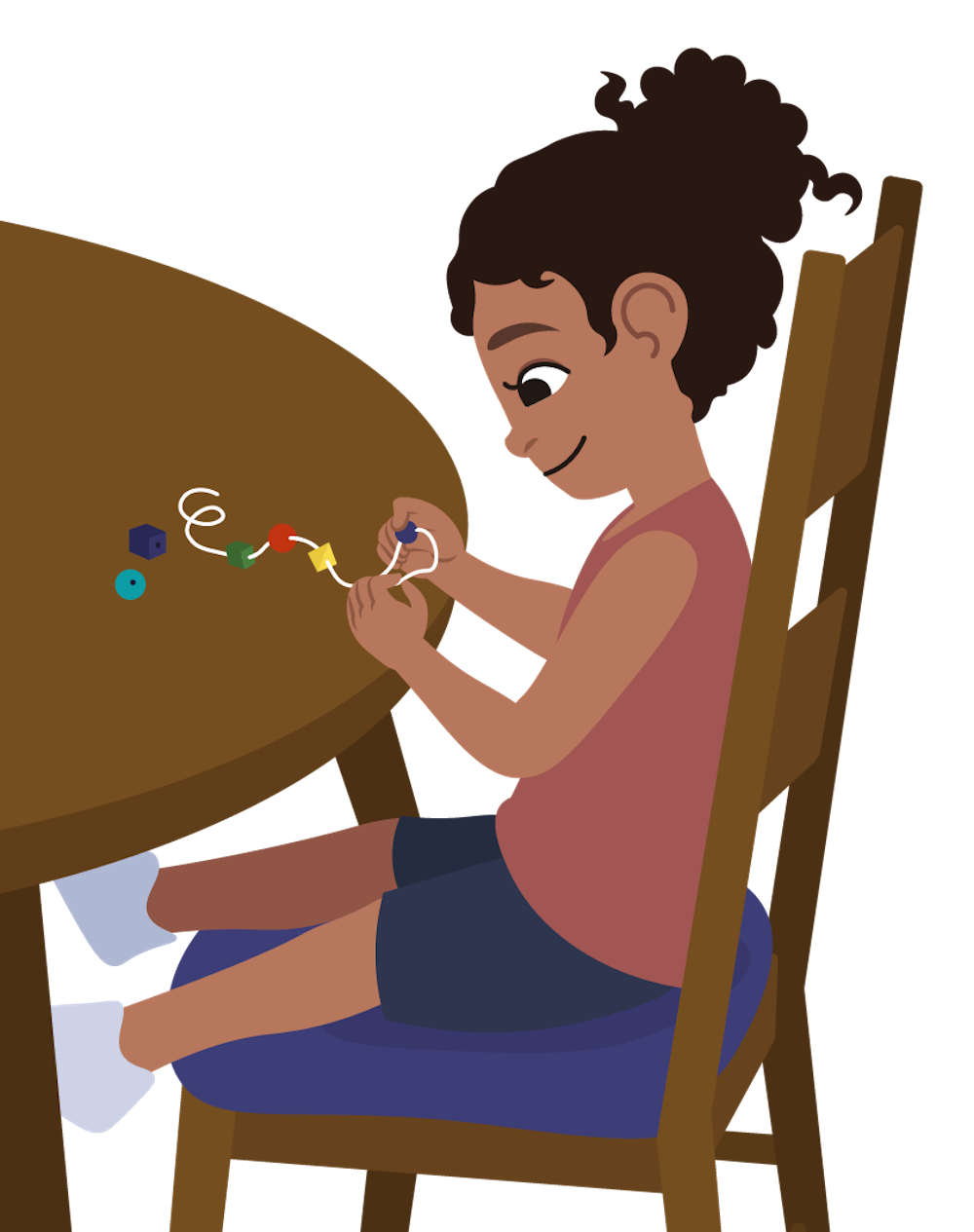
An activity to develop fine motor skills is stringing beads on a pipe cleaner. Stringing beads requires children to use their hands in a very purposeful way. Think about the fine motor skills it takes for a child to pick up small beads, turn them the right way, align them to a pipe cleaner, and string them on. This activity helps develop fine motor skills because stringing the beads uses similar hand movements like gripping a pencil. Practicing this activity over and over will help children hold a pencil or crayon when writing and drawing at school.
To do this activity, you need some beads and a pipe cleaner. Have your child pick a bead and put it on the pipe cleaner. We recommend that you pour a few beads into a small dish or bowl and bend one end of the pipe cleaner so that the beads won’t fall off.
During this activity, you can even discuss the colors and shapes of the beads and make a pattern as you string them.
- Beads or macaroni pasta (any pasta with holes)
- String, yarn or pipe cleaners
Summary
During the early years, children grow and change rapidly. As their first teachers, parents and caregivers play a crucial role in providing them with experiences that help them develop skills essential for success in school and life.
Fine and gross motor skills develop through practice and repetition. As children use their large and small muscles repeatedly, those muscles remember the movements and become automatic. That is why as parents, it is important to provide lots of opportunities for children to move and develop their gross and fine motor skills.
Children need opportunities to move and learn to control their finger muscles and strengthen their grip. They need to spend time running, climbing, jumping, and chasing each other. They need to scribble, paint, build, pour, cut with scissors, put puzzles together, and string beads.
As their bodies grow, they become more independent. Providing these rich experiences are important for the development of all children but are especially important for our preschoolers.
Remember with small children, skills develop through practice and repetition. Also remember that every child develops at their own pace. If your child isn’t doing exactly what an older sibling or a friend’s child can do, that’s completely normal! Skills will come with time, practice, and encouragement.